

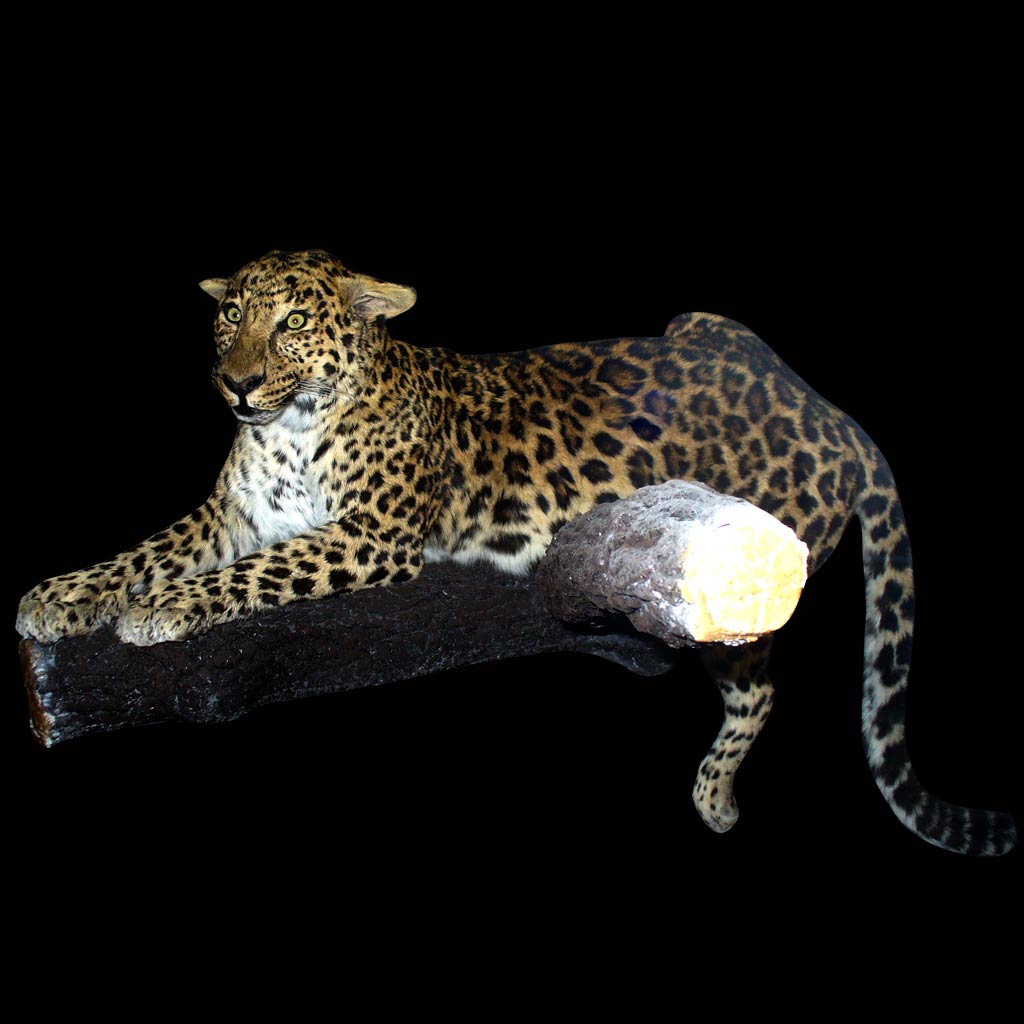
AMUR LEOPARD
PANTHERA PARDUS ORIENTALIS
Information
The Amur leopard is the only Panthera pardus subspecies adapted to a cold snowy climate. Amur leopards are crepuscular and usually start hunting shortly before sunset. They are active again in the early mornings. During the day, they rest and hide in caves or dense thickets, but rarely hunt. At places where wild animals are abundant, leopards live permanently or perform only vertical migrations, trailing herds of ungulates and avoiding snow. In the Ussuri region the main prey of leopards are roe and sika deer, Manchurian wapiti, musk deer, moose, and wild pig. More rarely they catch hare, badger, fowl, and mice. It is listed as Critically Endangered on the IUCN Red List. In 2007, only 19-26 wild Amur leopards were estimated to survive. As of 2015, fewer than 60 individuals are estimated to survive in Russia and China.
| DISTRIBUTION | The Amur leopard is a leopard subspecies native to the Primorye region of southeastern Russia, and the Jilin Province of northeast China and an area of North Korea. |
|---|---|
| HABITAT | It is inhabiting the temperate and cold forested regions of the Far East. |
| CONSERVATION STATUS | … |

 English
 Bulgarian