

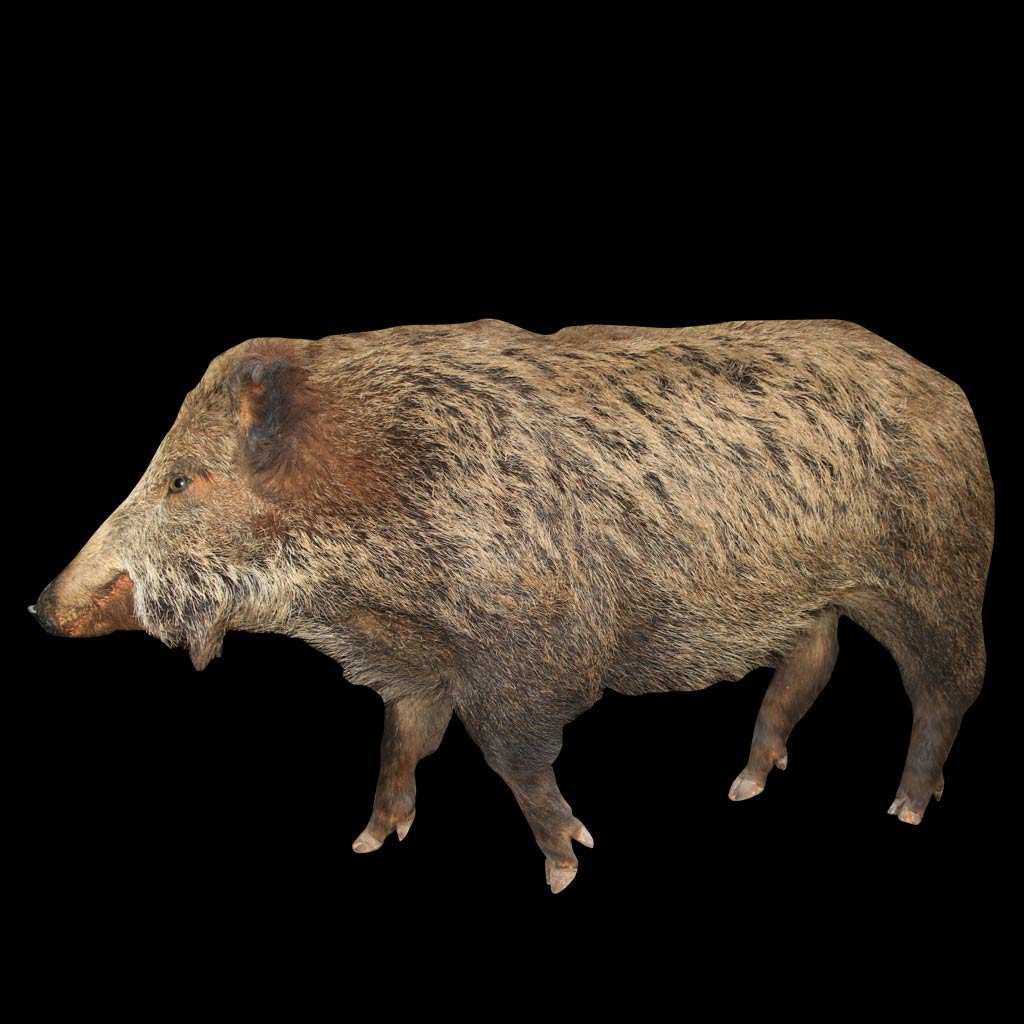
WILD BOAR
SUS SCROFA
Information
It is the ancestor of the Domestic pig. Boars are typically social animals, living in female-dominated sounders consisting of barren sows and mothers with young led by an old matriarch. Subadult males may live in loosely knit groups, while adult and elderly males tend to be solitary outside the breeding season. In most of Europe, males average 75-100 kg in weight, whereas females average 60-80 kg in weight. Some adult males in Ussuriland and Manchuria have been recorded to weigh 300-350 kg. Wild boars are known to host at least 20 different parasitic worm species, with maximum infections occurring in summer. The wild boar is a highly versatile omnivore, whose diversity in choice of food rivals that of humans. Their diet consists of roots, tubers and bulbs, all of which are dug up throughout the year in the animal's whole range; nuts, berries, and seeds, which are consumed when ripened and are dug up from the snow when abundant; leaves, bark, twigs, and shoots, along with garbage; earthworms, insects, mollusks, fish, rodents, insectivores, bird eggs, lizards, snakes, frogs, and carrion.
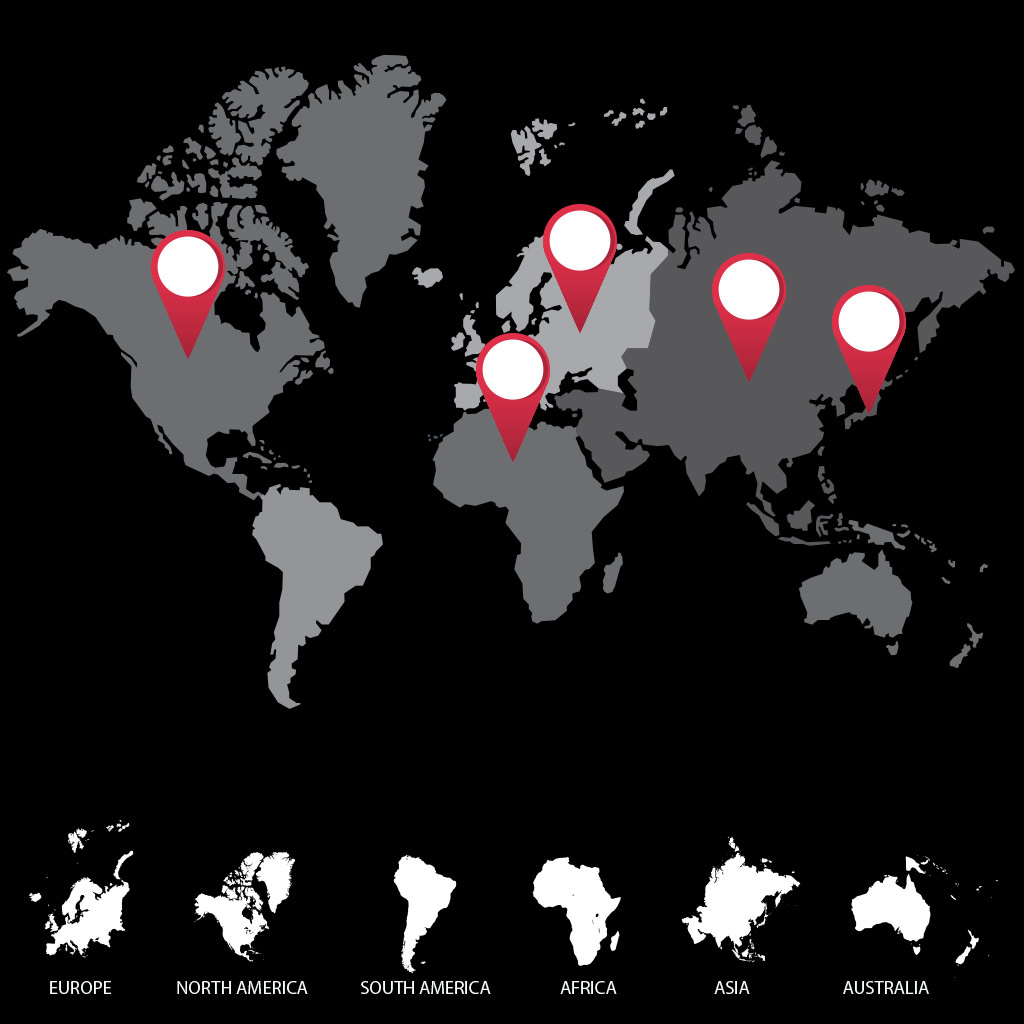
| DISTRIBUTION | Native to much of Eurasia and North Africa. Human intervention has spread its distribution further, making the species one of the widest-ranging mammals in the world. |
|---|---|
| HABITAT | The wild boar inhabits a diverse array of habitats from boreal taigas to deserts. In mountainous regions, it can even occupy alpine zones, occurring up to 4000 meters in the mountains in Central Asia. |
| CONSERVATION STATUS | … |
 English
 Bulgarian